Skills | 7 min read
Wing Foil Foot Position: Where to Stand and Why (2026)
2026-11-19 - words by Sam Calder

- Stance
- Centered
- Front foot
- Near mast
- Back foot
- Over tail
- Width
- Shoulder+
- Straps
- Optional
- Track
- Small changes
Foot position is one of the fastest fixes in wing foiling. Most balance problems are not a lack of talent; they are weight too far back, a stance that is too narrow or a front foot that is too far forward.
The basic stance
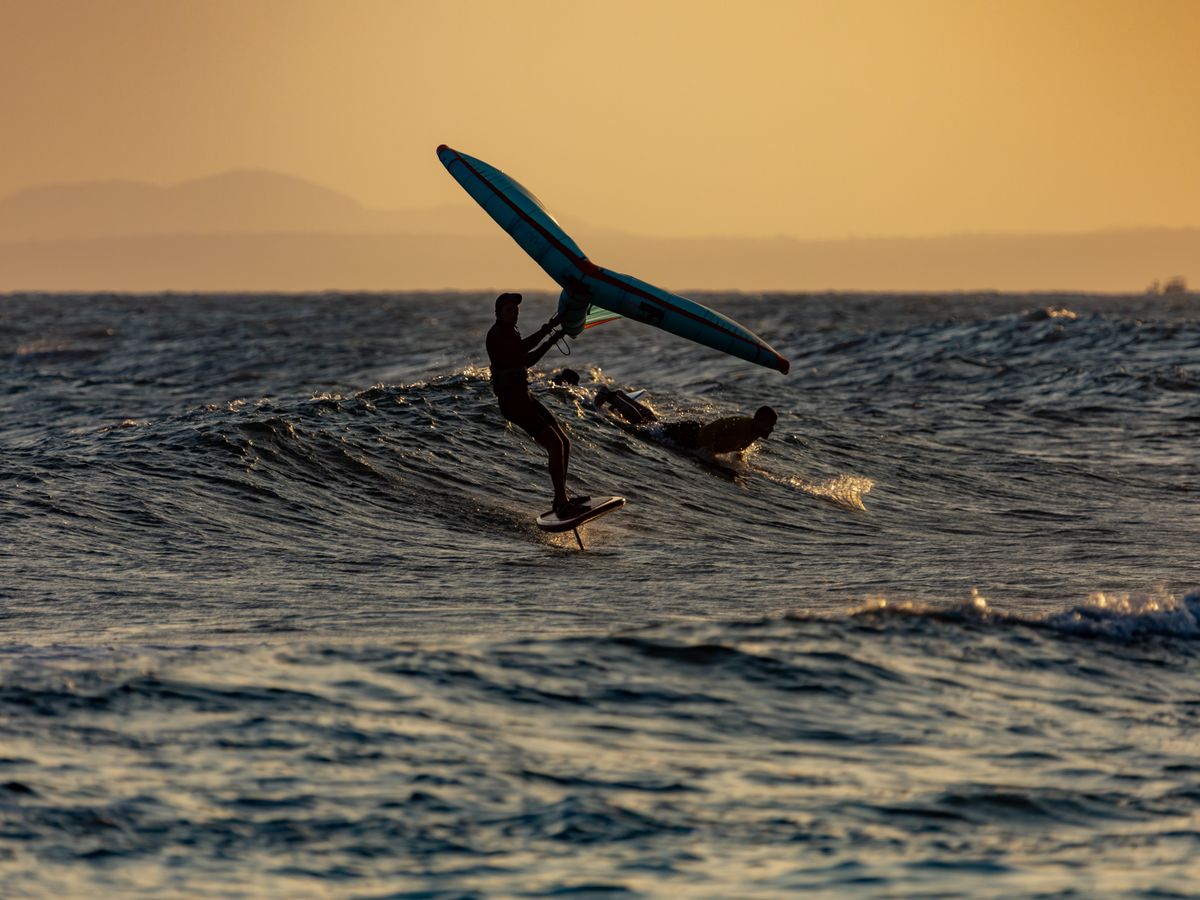
Stand over the center of the board with your knees bent and your weight balanced between both feet. Keep your chest up and look at the horizon, not at the board. A relaxed, athletic stance lets the board move under you instead of fighting it.
Front foot
Place your front foot near the mast or slightly forward of it. This gives you control over the foil's lift and makes it easier to keep the nose down during takeoff. If your front foot is too far forward, the board may feel like it wants to nose-dive; if it is too far back, you may struggle to get on foil.
Back foot
Place your back foot over the tail, roughly in the center of the tail section. This is your pitch control. Standing too far back makes the board nose-up and hard to control; standing too far forward makes it hard to lift off.
Stance width
A shoulder-width stance is a good starting point. A wider stance is more stable for learning and chop; a narrower stance is easier to turn and pump. Move in small increments and keep your knees soft.
Foot straps
Foot straps are optional. Most beginners learn strapless because it is easier to bail and adjust. If you use straps, set them so your feet enter and exit easily, and do not overtighten them. A loose strap is better than a trapped foot.
Foil track tuning
The foil track lets you move the foil forward or back. Start in the middle and change one increment at a time. If the board feels like it is fighting your front foot, move the foil slightly; if it feels like it wants to rise too early, move it the other way. Keep notes so you remember what worked.
Common mistakes
- Weight too far back, which makes the board nose-up.
- A stance that is too narrow, which feels twitchy.
- Front foot too far forward, which causes nose-dives.
- Stiff legs and a straight back.
- Looking down at the board instead of the horizon.
Read the common beginner mistakes, the beginner wing guide, and the board volume guide. If you are still choosing gear, check the size charts.
Common questions
Where should I put my front foot?+
Near the mast or slightly forward of it. This gives you control over lift and helps keep the nose down during takeoff.
Where should I put my back foot?+
Over the tail, roughly in the center of the tail section. It is your pitch control; too far back makes the board nose-up.
How wide should my stance be?+
Start about shoulder-width. A wider stance is more stable for learning; a narrower stance is easier to turn and pump.
Do I need foot straps?+
Not to start. Most beginners learn strapless because it is easier to bail and adjust. If you use straps, set them loose enough to enter and exit easily.
How do I adjust the foil track?+
Start in the middle and change one increment at a time. Note whether the board feels front-foot heavy or nose-up, and adjust accordingly.
Why do I keep falling backward?+
Your weight is probably too far back or the foil is lifting too early. Move your weight forward, keep your knees bent and check the foil track position.
Filed from the beach — Foilsummit Journal